


Non-Toxic Beauty Products: Why Safe Skincare Matters
Finding truly non-toxic beauty products can feel like a maze for eco-conscious women, especially with over 80% of American cosmetics tested containing at least one questionable chemical. Skin health deserves protection from more than just trendy buzzwords. By understanding how non-toxic standards differ and what responsible sourcing actually means, you can confidently choose beauty solutions that align with your wellness goals and ethical values.
Table of Contents
- Defining Non-Toxic Beauty Products Clearly
- Types of Non-Toxic Beauty and Their Distinctions
- Key Ingredients and Their Role in Skin Health
- Ethical Sourcing and Sustainability Practices
- Misconceptions and Gaps in Legal Standards
- Risks of Toxic Ingredients and Safer Alternatives
Key Takeaways
| Point | Details |
|---|---|
| Definition of Non-Toxic Beauty | Non-toxic beauty products exclude harmful synthetic chemicals and undergo rigorous safety screening to ensure health and environmental protection. |
| Categories of Non-Toxic Beauty | Types include Organic Skincare, Clean Beauty, Green Beauty, and Natural Beauty, each with unique standards regarding ingredients and environmental considerations. |
| Key Ingredients | Non-toxic formulations utilize natural ingredients like antioxidants and plant extracts that promote skin health and prevent damage from harmful compounds. |
| Risks of Toxic Ingredients | Conventional products may contain harmful chemicals linked to health risks; using natural alternatives can help avoid these dangers and support skin wellbeing. |
Defining Non-Toxic Beauty Products Clearly
Non-toxic beauty products represent a critical evolution in skincare, focusing on formulations that exclude harmful synthetic chemicals potentially damaging to human health and the environment. At its core, non-toxic beauty means selecting products free from ingredients scientifically linked to negative health consequences, such as endocrine disruptors, carcinogenic compounds, and skin-irritating synthetic additives.
The definition goes beyond simply avoiding a few problematic ingredients. A truly non-toxic product undergoes rigorous screening to ensure each component meets stringent safety standards. This means examining not just the primary ingredients, but also potential contaminants, manufacturing processes, and long-term environmental impact. Consumers seeking natural soap solutions can look for transparent labeling that reveals complete ingredient lists and highlights the absence of potentially harmful substances.
Key characteristics of non-toxic beauty products include using plant-based ingredients, avoiding synthetic fragrances, eliminating parabens and phthalates, and prioritizing organic and sustainably sourced components. These products are typically developed with a holistic approach that considers both human health and ecological preservation. Brands committed to non-toxic principles often conduct extensive testing to validate the safety and efficacy of their formulations, providing consumers with confidence in their skincare choices.
Pro tip: When evaluating non-toxic beauty products, always review the full ingredient list and research any unfamiliar terms to understand their potential health implications.
Types of Non-Toxic Beauty and Their Distinctions
Non-toxic beauty encompasses several distinct categories, each addressing unique health and environmental concerns through specialized approaches to formulation and production. The primary classifications include organic skincare, clean beauty, green beauty, and natural beauty products, each with specific characteristics that distinguish them from traditional cosmetic offerings.
Organic skincare represents the most stringent category, requiring ingredients to be certified organic and grown without synthetic pesticides or fertilizers. Clean beauty focuses on excluding potentially harmful ingredients like parabens, sulfates, and synthetic fragrances, prioritizing transparency and safety. By contrast, green beauty emphasizes environmental sustainability, considering not just ingredient safety but also ecological impact during sourcing and manufacturing. Natural soap selections demonstrate how these principles translate into practical product development, offering consumers options that align with health and environmental values.
The distinctions between these categories are nuanced but significant. While overlap exists, each type has unique standards. Natural beauty products use minimally processed ingredients derived from botanical sources, whereas clean beauty products might include some synthetic ingredients proven safe through rigorous testing. Green beauty goes beyond ingredient selection to consider packaging, carbon footprint, and overall environmental responsibility. This multi-dimensional approach ensures that consumers can choose products that match their specific wellness and ecological priorities.
Pro tip: Always read product labels carefully and research ingredient origins to understand the specific non-toxic classification of your skincare products.
Here’s a summary that clarifies the distinctions between different non-toxic beauty categories:
| Category | Ingredient Focus | Safety Standards | Environmental Priority |
|---|---|---|---|
| Organic Skincare | Certified organic sources | No synthetic pesticides or fertilizers | High—sustainable farming |
| Clean Beauty | Safe synthetics excluded | Transparent ingredient lists and safety | Moderate—mainly human health |
| Green Beauty | Eco-friendly ingredients | Focus on low-impact manufacturing | High—packaging and sourcing |
| Natural Beauty | Botanical, minimal processing | Botanical origin, less processing | Varies—dependent on sourcing |
Key Ingredients and Their Role in Skin Health
Non-toxic beauty products leverage powerful natural ingredients that promote skin health through targeted, scientifically-backed mechanisms. Antioxidants, vitamins, and botanical extracts play crucial roles in protecting, repairing, and nourishing skin at the cellular level, offering comprehensive protection beyond traditional cosmetic approaches.

Critical ingredients like Vitamin C demonstrate remarkable skin-transforming properties. This potent antioxidant helps neutralize free radical damage, stimulates collagen production, and provides natural brightening effects. Hyaluronic acid represents another foundational ingredient, capable of holding up to 1000 times its weight in water, which helps maintain optimal skin hydration and supports the skin’s natural barrier function. Other key non-toxic ingredients include niacinamide for reducing inflammation, green tea extract for antioxidant protection, and plant-based oils rich in essential fatty acids that support skin regeneration.
The most effective non-toxic skincare formulations combine multiple active ingredients that work synergistically. Ingredients like chamomile, aloe vera, and rosehip oil provide anti-inflammatory benefits, while adaptogens such as ashwagandha and ginseng help protect skin from environmental stressors. These natural compounds not only address immediate skin concerns but also support long-term skin health by promoting cellular repair and reducing oxidative stress. The holistic approach ensures that skin receives comprehensive nutrition and protection without exposure to potentially harmful synthetic chemicals.
Pro tip: Rotate your skincare ingredients seasonally to help your skin adapt to changing environmental conditions and maintain optimal health.
Ethical Sourcing and Sustainability Practices
Ethical sourcing in non-toxic beauty represents a comprehensive commitment to environmental responsibility, social justice, and transparent supply chain management. Sustainable practices go far beyond simple ingredient selection, encompassing holistic approaches that consider ecological impact, worker welfare, and long-term environmental preservation throughout the entire production process.
Brands dedicated to ethical sourcing prioritize direct relationships with agricultural communities, ensuring fair compensation and sustainable farming practices. Niacinamide vitamin serums exemplify how responsible ingredient procurement can support both local economies and environmental conservation. This approach involves carefully selecting suppliers who demonstrate commitment to organic farming, minimal water usage, biodiversity protection, and regenerative agricultural techniques that actively restore ecosystem health rather than merely avoiding damage.
True sustainability in beauty products requires a multi-dimensional strategy addressing carbon footprint, packaging materials, transportation emissions, and social responsibility. Ethical brands invest in recyclable or biodegradable packaging, minimize plastic usage, implement carbon offset programs, and support transparency through detailed ingredient sourcing documentation. Advanced sustainability practices include partnering with indigenous communities, protecting traditional botanical knowledge, and ensuring that ingredient harvesting supports local economic development while preserving natural habitats and cultural heritage.
Pro tip: Research brands that provide comprehensive sustainability reports and demonstrate transparent sourcing practices beyond marketing claims.
Misconceptions and Gaps in Legal Standards
The landscape of non-toxic beauty regulation is fraught with significant legal ambiguities that leave consumers vulnerable to misleading marketing claims and potentially harmful product formulations. Unlike food and pharmaceutical industries, cosmetic regulations in the United States remain surprisingly lenient, with minimal federal oversight regarding ingredient safety and product claims.
Consumers often mistakenly believe that hyaluronic acid products are automatically safe simply because they appear natural. However, current legal frameworks allow manufacturers considerable latitude in ingredient selection and labeling. The Food and Drug Administration (FDA) does not require pre-market approval for cosmetic products, meaning companies can introduce formulations without comprehensive safety testing. This regulatory gap creates an environment where terms like “natural” and “non-toxic” remain largely undefined, enabling brands to make broad claims without substantive scientific verification.
The most critical misconceptions stem from inadequate ingredient transparency and limited consumer protection mechanisms. While some states have begun implementing stricter regulations, federal standards remain remarkably outdated. Manufacturers can legally include chemicals linked to potential health risks, with little obligation to disclose comprehensive ingredient information or long-term safety data. This systemic lack of stringent oversight means consumers must become their own advocates, conducting independent research and critically evaluating product claims beyond surface-level marketing narratives.
Pro tip: Always cross-reference product ingredient lists with independent scientific databases to verify actual safety and potential health implications.
Risks of Toxic Ingredients and Safer Alternatives
Conventional beauty products frequently contain harmful chemical compounds that pose significant long-term health risks, ranging from hormonal disruption to potential carcinogenic effects. Ingredients like parabens, phthalates, and synthetic fragrances have been linked to serious health concerns, including endocrine system interference, reproductive complications, and increased cancer risk.
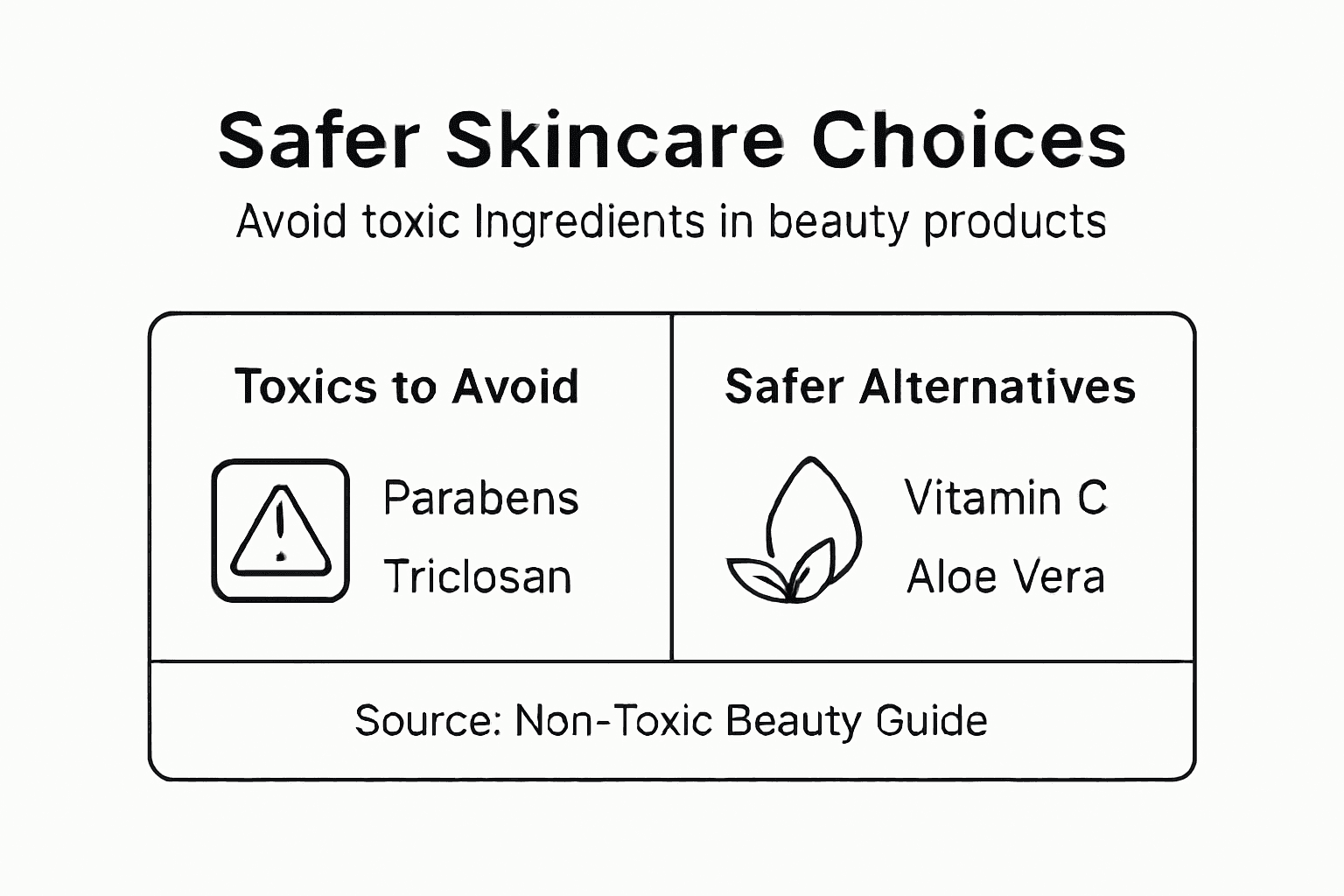
Critical toxic ingredients consumers should avoid include formaldehyde-releasing preservatives, triclosan, and petrochemical derivatives. Vitamin C serums offer a powerful alternative, providing natural antioxidant protection without the potential cellular damage associated with synthetic compounds. Safer botanical ingredients like green tea extract, chamomile, and aloe vera can effectively replace harsh chemical preservatives while offering additional skin-nourishing benefits. These natural alternatives not only minimize health risks but also provide more comprehensive nutritional support for skin cellular regeneration.
The most effective approach to avoiding toxic ingredients involves comprehensive ingredient education and strategic product selection. Consumers must learn to decode complex ingredient labels, understanding that terms like “fragrance” can mask hundreds of potentially harmful synthetic chemicals. Plant-based, organic ingredients sourced through transparent supply chains represent the gold standard in safe skincare, offering targeted nutritional benefits without introducing unnecessary chemical risks. By prioritizing products with scientifically validated natural ingredients, individuals can protect their skin’s long-term health while supporting broader environmental sustainability.
Pro tip: Develop a personal “avoid list” of known toxic ingredients and cross-reference product labels before purchasing skincare products.
For easy reference, here’s a comparison of toxic ingredients and their natural alternatives:
| Toxic Ingredient | Associated Risks | Safer Alternative | Key Benefits |
|---|---|---|---|
| Parabens | Hormonal disruption | Green tea extract | Antioxidant, non-irritating |
| Phthalates | Reproductive complications | Chamomile | Anti-inflammatory, soothing |
| Formaldehyde derivatives | Increased cancer risk | Aloe vera | Moisturizing, gentle |
| Synthetic fragrance | Skin irritation, allergies | Vitamin C serum | Brightens, protects skin |
Discover Safe and Luxurious Non-Toxic Beauty Solutions Today
The challenge many face when choosing beauty products is finding truly non-toxic skincare that aligns with ethical sourcing and sustainability without sacrificing effectiveness. If you are concerned about harmful chemicals like parabens or synthetic fragrances and want skincare packed with natural antioxidants and vitamins, you are not alone. At Kompis Cosmetics, we understand your desire for transparent, safe, and cruelty-free beauty options that support both your skin health and the planet.
Explore our carefully curated range of natural skincare products formulated without toxic ingredients. Each item is crafted to combine the best of ethical sourcing and scientifically-backed natural ingredients like Vitamin C, niacinamide, and green tea extract. With Kompis Cosmetics, you get more than a beauty product. You gain peace of mind knowing your choices promote long-term skin wellness and environmental sustainability.

Start your journey to healthier, radiant skin now. Visit Kompis Cosmetics to browse our full selection of cruelty-free, non-toxic beauty solutions designed for every skin type. Take control of your skincare choices and experience the true meaning of safe, luxurious beauty today.
Frequently Asked Questions
What defines non-toxic beauty products?
Non-toxic beauty products are those formulated without harmful synthetic chemicals linked to negative health effects. They undergo rigorous screening to ensure ingredient safety, focusing on plant-based components and excluding substances like parabens, phthalates, and synthetic fragrances.
How can I identify non-toxic beauty products?
Look for transparent labeling that provides complete ingredient lists. Verify that the products avoid known harmful substances, such as parabens and synthetic fragrances, and consider certifications like organic or cruelty-free for added assurance of product safety.
What are the different categories of non-toxic beauty products?
The main categories include organic skincare (certified organic ingredients), clean beauty (excludes harmful ingredients), green beauty (focuses on sustainability), and natural beauty (uses minimally processed botanical ingredients). Each has distinct criteria for ingredient safety and environmental impact.
Why is it important to avoid toxic ingredients in skincare?
Avoiding toxic ingredients is crucial as they can have long-term health risks, including hormonal disruption and cancer. Non-toxic alternatives, like botanical ingredients, provide effective skincare without the dangers associated with harmful synthetic compounds.

