


How to Maintain Skin Health Naturally: Proven Steps
Finding the perfect cruelty free skincare routine can feel overwhelming for many American beauty lovers who want both healthy skin and a clear conscience. Nearly 60 percent of American consumers now prioritize sustainability and animal welfare when choosing cosmetics. This shift spotlights the demand for effective routines that truly support skin health while embracing eco friendly values. Explore smart ways to assess your skin type, choose ethical products, and create lasting results through thoughtful sustainable skincare habits.
Table of Contents
- Step 1: Assess Your Skin Type And Specific Needs
- Step 2: Select Ethical And Natural Skincare Products
- Step 3: Establish A Consistent Cleansing And Moisturizing Routine
- Step 4: Integrate Sun Protection And Preventive Care Daily
- Step 5: Monitor Skin Progress And Adjust Routines As Needed
Quick Summary
| Key Takeaway | Explanation |
|---|---|
| 1. Identify your skin type clearly | Assess your skin’s moisture, oiliness, and sensitivity to determine if it’s dry, oily, combination, sensitive, or normal. |
| 2. Choose natural, ethical products | Opt for skincare items with botanical ingredients and responsible sourcing, avoiding harmful synthetic chemicals. |
| 3. Maintain a consistent routine | Cleanse and moisturize twice daily for at least six weeks to observe improvements in your skin’s health and texture. |
| 4. Prioritize sun protection daily | Use broad spectrum sunscreen with SPF 30, reapply every two hours, and wear protective clothing to shield against UV rays. |
| 5. Track your skin’s progress | Monitor changes using photos and notes to adapt your routine based on how your skin responds and evolves over time. |
Step 1: Assess your skin type and specific needs
Understanding your unique skin characteristics is the foundation for developing an effective skincare routine. By carefully evaluating skin classification methods, you can make informed decisions about product selection and personalized care.
Start by examining your skin’s fundamental qualities through several key observations. Look closely at how your skin responds to environmental factors skin texture, oiliness, sensitivity, and hydration levels. Pay attention to whether your skin tends to feel tight and dry, appears shiny and greasy, or maintains a balanced appearance. Notice how your skin reacts to different weather conditions sunlight exposure, humidity, and temperature changes. These observations will help you identify whether you have dry, oily, combination, sensitive, or normal skin type.
Consider conducting a simple home assessment by cleansing your face and waiting one hour without applying any products. Observe how your skin feels check for shine, tightness, flakiness, or discomfort. These indicators provide valuable insights into your specific skin type classification and can guide your future skincare choices.
Pro tip: Take clear, well-lit photos of your skin in natural daylight to track changes and help professional skincare experts provide more accurate recommendations if needed.
Here’s a quick reference table to help identify common skin types and their traits:
| Skin Type | Typical Features | Best Practices |
|---|---|---|
| Dry | Tightness, flakiness | Hydrate frequently |
| Oily | Shine, visible pores | Use oil-free products |
| Combination | Mixed dry/oily zones | Target zone care |
| Sensitive | Redness, irritation | Avoid harsh ingredients |
| Normal | Balanced, few issues | Maintain consistency |
Step 2: Select ethical and natural skincare products
Making mindful choices about skincare products is crucial for maintaining both personal health and environmental sustainability. Sustainable cosmeceutical innovations have transformed the beauty industry, offering consumers powerful alternatives to traditional chemical based products.
When selecting skincare products, focus on ingredients that are naturally derived and responsibly sourced. Look for products containing herbal extracts, marine algae, and botanical compounds that provide effective skincare without harmful synthetic chemicals. Pay attention to packaging materials sustainable brands often use recyclable or biodegradable containers. Check product labels for certifications like organic, cruelty free, and environmentally friendly. Research brand transparency about their sourcing practices and production methods consumer awareness drives ethical cosmetic choices, so understanding a brands commitment to sustainability matters.

Consider your specific skin type and concerns when exploring natural product options. Some natural ingredients might work better for certain skin conditions, so experiment carefully and observe how your skin responds to different formulations. Read ingredient lists thoroughly and prioritize products with minimalist, clean ingredient profiles.
Pro tip: Download mobile apps that scan product ingredients and provide detailed environmental and health impact assessments to make more informed skincare purchasing decisions.
Here is a summary comparing natural vs. conventional skincare product attributes:
| Attribute | Natural Products | Conventional Products |
|---|---|---|
| Main Ingredients | Plant, mineral sources | Synthetic chemicals |
| Environmental Impact | Often sustainably sourced | May involve pollutants |
| Packaging | Biodegradable or recyclable | Plastic, non-recyclable |
| Suitability | Gentle, skin-friendly | Can cause sensitivity |
Step 3: Establish a consistent cleansing and moisturizing routine
Creating a reliable skincare routine is fundamental to maintaining healthy radiant skin. Daily cleansing and moisturizing practices play a critical role in preserving skin integrity and preventing common skin issues.
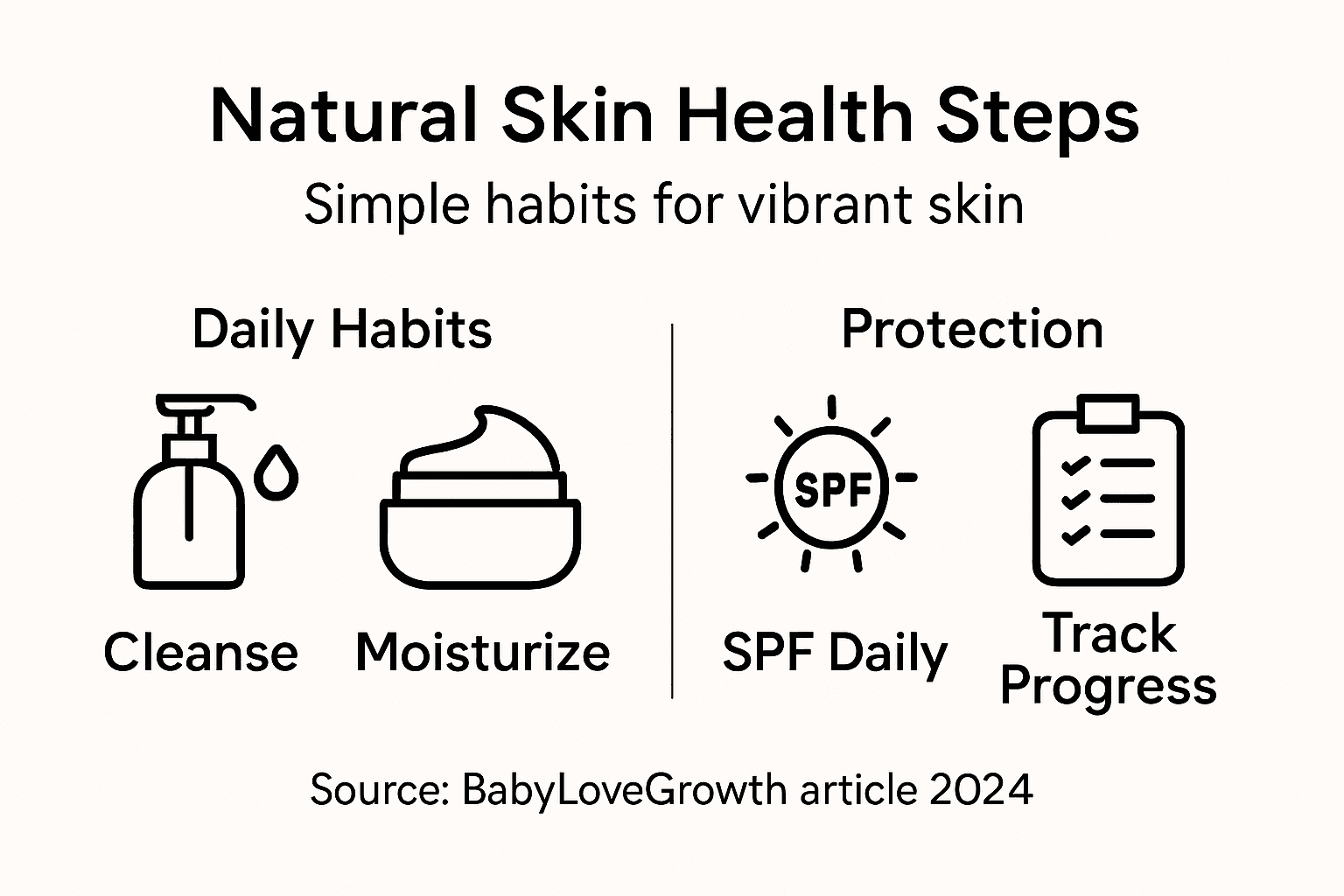
Begin by selecting gentle cleansers appropriate for your specific skin type. Use lukewarm water to avoid stripping natural oils and massage the cleanser in circular motions to thoroughly remove dirt and impurities. After cleansing, immediately apply a moisturizer to lock in hydration while your skin is still slightly damp. Choose low pH moisturizers with humectant ingredients that support your skins natural barrier function. Morning routines should include lightweight hydrating products with added sun protection, while evening routines can incorporate richer formulations that support overnight skin repair.
Consistency is key when establishing a skincare routine. Aim to cleanse and moisturize twice daily morning and evening and stick to this schedule for at least six weeks to observe noticeable improvements in your skins texture and overall health. Remember that individual skin responses vary, so pay attention to how your skin reacts and be prepared to make subtle adjustments.
Pro tip: Keep your skincare products in a cool dry place and use clean hands or applicators to prevent bacterial contamination and maintain product efficacy.
Step 4: Integrate sun protection and preventive care daily
Protecting your skin from harmful ultraviolet radiation is essential for long term health and preventing premature aging. Wearable technology offers promising UV monitoring strategies to help you track and manage sun exposure effectively.
Develop a comprehensive sun protection strategy that goes beyond simply applying sunscreen. Choose a broad spectrum sunscreen with at least SPF 30 that protects against both UVA and UVB rays, and apply generously to all exposed skin areas. Reapply every two hours or immediately after swimming or excessive sweating. Complement topical protection by wearing protective clothing like wide brimmed hats, long sleeve shirts, and sunglasses. Seek shade during peak sunlight hours between 10 am and 4 pm when ultraviolet radiation is most intense. Individualized preventive sun care advice can dramatically improve your long term skin health and reduce cancer risks.
Make sun protection a non negotiable part of your daily routine regardless of weather conditions. Cloudy days and winter months still expose your skin to harmful radiation, so consistent protection is key. Consider incorporating sun protective makeup or moisturizers with built in SPF for additional daily coverage.
Pro tip: Keep a travel sized sunscreen in your bag or car to ensure you can reapply protection throughout the day, even when unexpected sun exposure occurs.
Step 5: Monitor skin progress and adjust routines as needed
Tracking your skin’s health journey requires consistent observation and strategic adaptation. Personalized skin management methodologies offer sophisticated approaches to understanding your unique skin characteristics.
Document your skincare progress through systematic methods like weekly photographs, detailed journaling, and precise measurements. Focus on key parameters such as hydration levels, texture changes, radiance, and any emerging concerns. AI powered tracking tools can provide objective analysis of subtle skin transformations, helping you make data driven adjustments to your skincare routine. Pay close attention to how your skin responds to different products, environmental conditions, and lifestyle factors.
Create a flexible skincare strategy that allows for periodic reassessment. Schedule quarterly skin evaluations where you critically analyze your current routine against your observed results. Be prepared to modify your approach based on seasonal changes, age related shifts, and individual skin responses. This adaptive method ensures your skincare routine remains personalized and effective throughout different life stages.
Pro tip: Create a digital or physical skin diary with dated photos and notes to help you track progress and identify patterns in your skins behavior over time.
Embrace Natural Skin Health with Kompis Cosmetics
Maintaining healthy skin naturally requires understanding your unique skin type, choosing ethical products, and following a consistent routine as detailed in “How to Maintain Skin Health Naturally: Proven Steps”. If you struggle with finding gentle, effective, and cruelty-free skincare that suits sensitive or combination skin, Kompis Cosmetics offers solutions designed with your needs in mind. Their commitment to sustainability aligns perfectly with your goal of using natural, responsibly sourced ingredients that nurture your skin without harmful chemicals.

Discover luxurious, high-quality moisturizers, serums, and foundations that support your skin’s natural balance while protecting it daily. Don’t wait to elevate your skincare routine to one that respects both your skin and ethical values. Visit Kompis Cosmetics now to explore personalized, cruelty-free beauty designed to help your skin thrive naturally. Take the first step toward radiant, protected skin with products crafted just for you.
Frequently Asked Questions
How can I determine my skin type for a natural skincare routine?
Understanding your skin type is essential for choosing the right products. Start by cleansing your face and waiting one hour without applying anything. Observe how your skin feels—check for tightness, dryness, shine, or flakiness to classify your skin as dry, oily, combination, sensitive, or normal.
What ingredients should I look for in natural skincare products?
Focus on ingredients that are naturally derived and responsibly sourced, such as herbal extracts, marine algae, and botanical compounds. Prioritize products with minimal, clean ingredient profiles to avoid harmful synthetic chemicals and enhance skin healing. Check for certifications like organic or cruelty-free for added assurance.
How can I create a consistent skincare routine?
Establish a reliable routine by cleansing and moisturizing your skin twice daily—once in the morning and once in the evening. Use a gentle cleanser suitable for your skin type, and immediately apply a moisturizer while your skin is slightly damp for best results to see improvements within 4 to 6 weeks.
How do I protect my skin from the sun naturally?
Incorporate sun protection by using a broad-spectrum sunscreen with at least SPF 30 and reapply every two hours. Wear protective clothing, like wide-brimmed hats, and seek shade during peak sunlight hours to further safeguard your skin from UV damage.
What should I do if my skin condition changes over time?
Monitor your skin regularly by taking photos and keeping a journal to track its progress and changes. Reassess your skincare routine every few months to make necessary adjustments based on observed results and seasonal changes, ensuring that your skincare remains effective as your skin evolves.

